B1B79-PASSENGER SEAT WEIGHT SENSOR 3 - LEFT FRONT INPUT CIRCUIT LOW
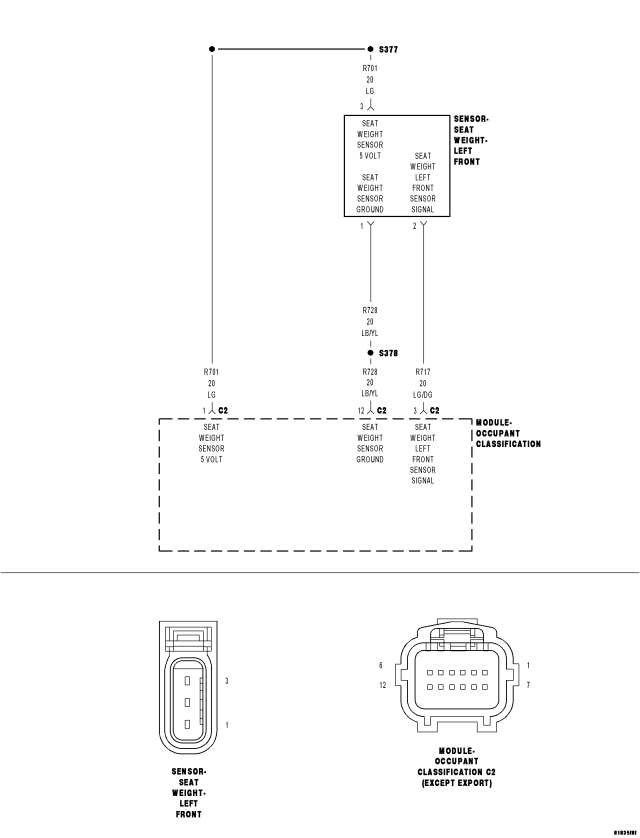
For a complete wiring diagram Refer to Section 8W.
- When Monitored:
While the CAN bus ignition status is in IGN_RUN, the module checks the sensor input ranges.
- Set Condition:
If the module detects that the sensor input is less than 3.4 ± .6% of the (R701) Seat Weight Sensor 5 Volt circuit voltage. This DTC will also set if the (R701) Seat Weight Sensor 5 Volt circuit is shorted to ground. However, this condition would prevent communication with the OCM and cause a Lost Communication With OCM DTC to set in other modules. Also, this DTC will remain active after the condition that set this fault is no longer present. This condition is referred to as latching the DTC for the ignition cycle. Cycling the ignition key will change the status from active to stored if the condition that set the fault is no longer present.
| Possible Causes |
| ACTIVE B1B79 DTC AND B1B7A DTC AT THE SAME TIME |
| PASSENGER SEAT HARNESS IMPROPERLY ROUTED |
| PASSENGER SEAT HARNESS WIRES CHAFED, PIERCED, PINCHED, PARTIALLY BROKEN |
| PASSENGER SEAT HARNESS CONNECTOR TERMINALS BROKEN, BENT PUSHED OUT, SPREAD, CORRODED, CONTAMINATED |
| (R717) LT-FT SEAT WEIGHT SENSOR SIGNAL CIRCUIT SHORTED TO GROUND |
| (R717) LT-FT SEAT WEIGHT SENSOR SIGNAL CIRCUIT OPEN |
| (R701) SEAT WEIGHT SENSOR 5 VOLT CIRCUIT OPEN |
| LEFT-FRONT SEAT WEIGHT SENSOR |
| OCCUPANT CLASSIFICATION MODULE (OCM) |
Diagnostic Test
1.CHECK FOR ACTIVE INTERNAL FAULTS, IGNITION FAULTS, AND BATTERY FAULTS IN THE OCCUPANT CLASSIFICATION MODULE (OCM)NOTE: Ensure that the battery is fully charged.
NOTE: When reconnecting airbag system components, the ignition must be turned off and the battery must be disconnected.
Does the scan tool display any active DTCs relating to internal faults, ignition faults, or battery faults?
Yes
- Diagnose and repair the DTCs. Refer to the Table of Contents in this Section for a complete list of symptoms.
No
- Go To 2
2.VERIFY THAT DTC B1B79-PASSENGER SEAT WEIGHT SENSOR 3 - LEFT FRONT INPUT CIRCUIT LOW IS ACTIVE
Does the scan tool display active: B1B79-PASSENGER SEAT WEIGHT SENSOR 3 - LEFT FRONT INPUT CIRCUIT LOW?
Yes
- Go To 3
No
- Go To 10
3.VERIFY THAT B1B7A-PASSENGER SEAT WEIGHT SENSOR 3 - LEFT FRONT INPUT CIRCUIT HIGH DTC AND B1B79-PASSENGER SEAT WEIGHT SENSOR 3 - LEFT FRONT INPUT CIRCUIT LOW DTC ARE ACTIVE AT THE SAME TIME
Does the scan tool display active: B1B7A-PASSENGER SEAT WEIGHT SENSOR 3 - LEFT FRONT INPUT CIRCUIT HIGH AND B1B79-PASSENGER SEAT WEIGHT SENSOR 3 - LEFT FRONT INPUT CIRCUIT LOW AT THE SAME TIME?
Yes
- Perform B1B79-PASSENGER SEAT WEIGHT SENSOR 3 - LEFT FRONT INPUT CIRCUIT HIGH diagnostic test.
No
- Go To 4
4.INSPECT PASSENGER SEAT HARNESS WIRES AND CONNECTORS
WARNING: To avoid personal injury or death, turn the ignition off, disconnect the battery and wait two minutes before proceeding.
Are any of these conditions present?
Yes
NOTE: Do not attempt to repair the Seat Harness. Replace the Seat Harness if the condition inspecting or testing for is present in the Seat Harness.
- Replace the Passenger Seat Harness in accordance with the Service Information.
- Perform *OCM SYSTEM VERIFICATION TEST.
No
- Go To 5
5.VERIFY THAT PASSENGER SEAT HARNESS IS ROUTED CORRECTLY
Is the Passenger Seat Harness routed correctly?
Yes
- Go To 6
No
- Reroute the Passenger Seat Harness as necessary.
- Perform *OCM SYSTEM VERIFICATION TEST.
6.CHECK VOLTAGE OF (R701) SEAT WEIGHT SENSOR 5 VOLT CIRCUIT
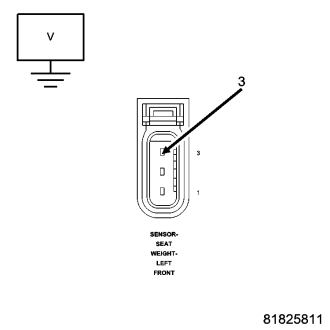
WARNING: To avoid personal injury or death, turn the ignition on, then reconnect the battery.
Is the voltage above 4.8 volts?
Yes
- Go To 7
No
- Go To 9
7.CHECK (R717) LT-FT SEAT WEIGHT SENSOR SIGNAL CIRCUIT FOR A SHORT TO GROUND
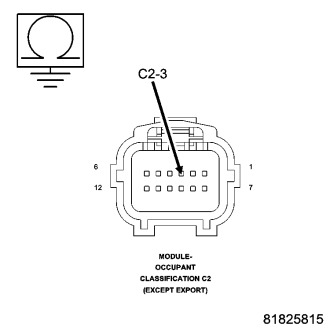
WARNING: To avoid personal injury or death, turn the ignition off, disconnect the battery and wait two minutes before proceeding.
Is the resistance below 5.0 ohms?
Yes
NOTE: Do not attempt to repair the Seat Harness. Replace the Seat Harness if the condition inspecting or testing for is present in the Seat Harness.
- Replace the Passenger Seat Harness in accordance with the Service Information.
- Perform *OCM SYSTEM VERIFICATION TEST.
No
- Go To 8
8.CHECK (R717) LT-FT SEAT WEIGHT SENSOR SIGNAL CIRCUIT FOR AN OPEN
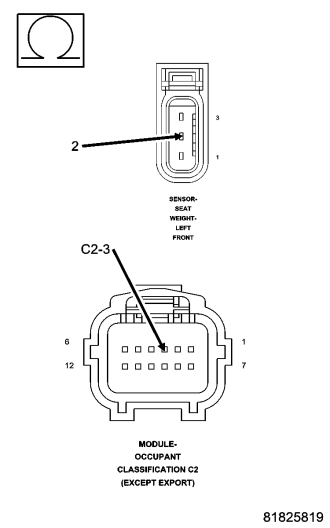
Is the resistance below 5.0 ohms?
Yes
- Replace the Left-Front Seat Weight Sensor in accordance with the Service Information.
- Perform *OCM SYSTEM VERIFICATION TEST.
- If DTC B1B79-PASSENGER SEAT WEIGHT SENSOR 3 - LEFT FRONT INPUT CIRCUIT LOW returns active, replace the OCM in accordance with the Service Information.
No
NOTE: Do not attempt to repair the Seat Harness. Replace the Seat Harness if the condition inspecting or testing for is present in the Seat Harness.
- Replace the Passenger Seat Harness in accordance with the Service Information.
- Perform *OCM SYSTEM VERIFICATION TEST.
9.CHECK (R701) SEAT WEIGHT SENSOR 5 VOLT CIRCUIT FOR AN OPEN
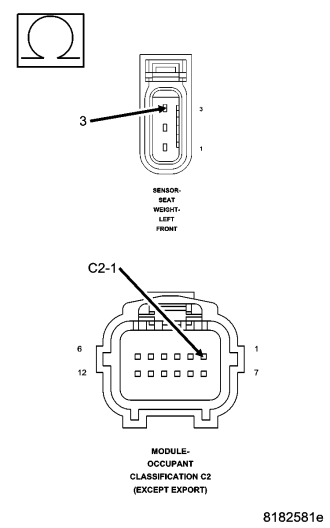
WARNING: To avoid personal injury or death, turn the ignition off, disconnect the battery and wait two minutes before proceeding.
Is the resistance below 5.0 ohms?
Yes
- Replace the OCM in accordance with the Service Information.
- Perform *OCM SYSTEM VERIFICATION TEST.
No
NOTE: Do not attempt to repair the Seat Harness. Replace the Seat Harness if the condition inspecting or testing for is present in the Seat Harness.
- Replace the Passenger Seat Harness in accordance with the Service Information.
- Perform *OCM SYSTEM VERIFICATION TEST.
10.CHECKING STORED OR INTERMITTENT CODES
NOTE: Diagnose and repair all active codes before diagnosing stored codes. Refer to the Table of Contents in this Section for a complete list of airbag system diagnostic procedures.
WARNING: To avoid personal injury or death, turn the ignition off, disconnect the battery and wait two minutes before proceeding.
WARNING: To avoid personal injury or death, turn the ignition on, then reconnect the battery.
- Wiggle the wiring harness and connectors of the related airbag circuit.
- Continue the test until either a code becomes active or the problem area is isolated.
Are any ACTIVE DTCs present?
Yes
- Select the appropriate diagnostic procedure from the Table of Contents in this section.
No
- No problem found at this time. Perform the Occupant Classification Module System Verification Test in this Section. Erase all codes before returning vehicle to customer.