INSTALLATION
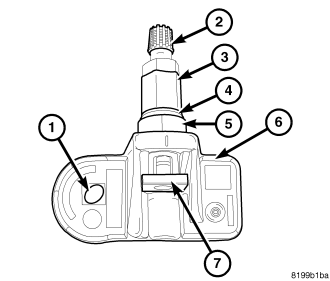
NOTE: If replacing the spare tire pressure sensor, take the time now to write down the tire pressure sensor ID.
NOTE: Before reinstalling an existing tire pressure sensor (6), replace valve cap (2), valve core and sensor seal (4) to ensure proper sealing.
NOTE: The notch/flat should be lined up together and facing towards the wheel during installation.
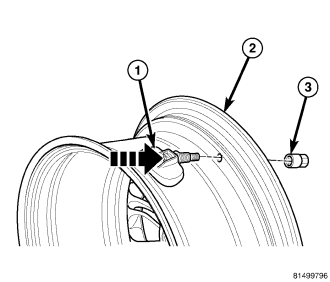
NOTE: A flat on the seal seat is used to key the seat to the sensor housing. The notch/flat should be lined up together and facing towards the wheel during installation.
NOTE: Before tightening sensor nut, push downward on sensor housing (2) in an attempt to make it flush with interior contour of wheel (1).
CAUTION: Over-torquing the sensor to as much as 10 N·m (88 in. lbs.) may result in sensor separation from the valve stem. Under this condition, the sensor may still function, however, the condition should be corrected immediately.
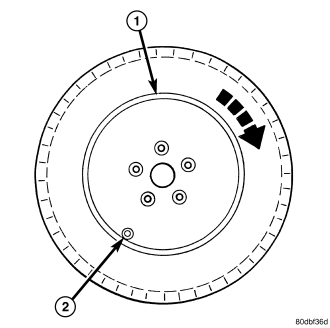
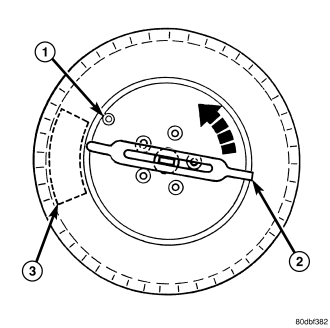
original style
(Refer to 22 - TIRES/WHEELS/WHEELS - STANDARD PROCEDURE)
NOTE: If a sensor cannot be trained, refer to appropriate diagnostic information.
SPARE TIRE SENSOR REPLACEMENT
NOTE: When the spare tire sensor is replaced on vehicles equipped with a Tire Pressure Monitoring System (TPMS) and a full-sized matching spare tire and wheel assembly, a diagnostic scan tool MUST be used to run a routine that will program the new pressure sensor ID into the Wireless Control Module (WCM), commonly referred to as the Sentry Key Remote Entry Module (SKREEM). Please copy the ID number off of the new pressure sensor before installing it into the spare tire. Then follow the programming steps outlined in the diagnostic scan tool for: “Learn Spare Tire Sensor ID” under” Miscellaneous Functions” for the “WCM/Wireless Control Module” menu item as appropriate. If a TPM-RKE Analyzer special tool is available, put the new spare tire pressure sensor into “Park” mode. If a TPM-RKE Analyzer special tool is not available, rotate the spare tire with one of the road tires.